Education
for Life: Preparing Children to Meet the Challenges (Continued)
Please note direct word-for-word quotes from Education for
Life are indicated by single quotation marks.
Chapter 5: Every Child’s Real Self (And the characteristics
of greatness)
| 'Great men and women, whether scientists or artists or leaders of any kind, are great in some way, at least, as human beings. Were this not so, they would never be able to manifest what it took to produce their great works. Is it enough, then, merely to study their works? Children need to be offered also a study of what makes people great as human beings. In this way, the children may be inspired toward greatness themselves.' | 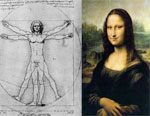 |
Greatness in human beings comes
from within. Hence many great minds throughout history have continuously
offered mankind the counsel to “turn within” in the quest
for wisdom. 'Man’s very ability to relate meaningfully to others
depends first of all on his own sensitivity.'
So what are some of the characteristics of this greatness?
Many great people '...demonstrate greatness in their ability to rise above
petty self-preoccupation and reach out toward broader realities. You see
this particularly with great scientists.'
'Motivation is only one test of greatness. Lesser scientists, and lesser
human beings generally, are almost by definition motivated by the thought,
“What’s in it for me? What will I get out of it?” It
is their pettiness that makes them lesser. The broader the outlook on
life, the less the concern with personal gain.'
'Great scientists, again, have been clear and calm enough in themselves
to be able to focus all their energy and attention on the tasks at hand.
Most people lack this ability to concentrate. They haven’t, therefore,
that extra faculty of perception which is the final secret of genius.
Sensitive perception is a natural product of calm concentration. Another
word for it is intuition.'
It is this intuition that is the source of wisdom.
| 'Pythagoras, the Greek sage, lived at a time when civilized man had neither the facts nor the vision to think of the universe as anything but flat, and geocentric. Yet Pythagoras stated that the Earth is round, and that we and all the visible stars revolve around a great central fire. His explanation of things, for many centuries considered only quaint, is astonishingly like that given by modern astronomers, who tell us that all the visible stars belong to a single galaxy, and revolve slowly around what might be described as a fiery center—packed as it is, from our distant perspective, with the billions of stars of the Milky Way.' | 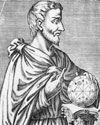 |
From where did Pythagoras’s
amazing knowledge come from? 'Surely, no theory so all-embracing could
have sprung out of the common knowledge of his times. It must be attributed,
first, to the expansiveness of his own consciousness.'
'Greatness has always been associated with an expansion of consciousness.
And an expansion of consciousness has always, in the long history of civilization,
been associated with an expansion of such feelings as sympathy, empathy,
and love. Far from setting oneself apart from, or even against, other
human beings, self-expansion naturally includes a concern for the well-being
of all.'
Finally, there are numerous other teachings, born of practical human experience,
that are the discoveries of people who showed by their own lives that
they had found keys to unlock the door to human happiness. For instance
humility, 'a human characteristic that can be tested for its value to
us all in our search for personal fulfillment.' 'It doesn’t take
much experience of life to see that pride does in fact “go before
a fall,” as the wisdom of the ages has always told us; and that
genuine humility “works”—that is to say, it attracts
what people really want in life: success, support from others, and an
ability to ride the waves of difficulty. Humility, like countless other
virtues, is a practical concept. Why not teach it that way in the classroom?'
Chapter 5 in full can be found through this link for those who want to
go into greater depth.
 |
 |
© Shanti Lion Children's Trust: 2006, 2007
This Web page may be linked to any other Web sites. Contents may not be altered.