Education
for Life: Preparing Children to Meet the Challenges (Continued)
Please note direct word-for-word quotes from Education for Life are indicated
by single quotation marks.
Chapter 1: Success Is Achieving What One REALLY Wants (—
Real Happiness)
'Systems of education are directed largely by what parents want for their
children. Because most parents want material advantages for them, the
modern system of education was developed primarily with this goal in mind.
Little attention, if any, has been paid to helping students to become
successful human beings.'
| 'Success means much more
than money and power.' What good are millions of dollars if their
attainment costs one happiness and all that makes life truly worth
living? It comes down to what people really want from life. People seek money, prestige, and power because they want these for the inner satisfaction, the happiness, they expect to gain through them. However there is a difference between gaining the mere symbols of happiness and real happiness. |
 |
' Why, then, don’t our
schools teach students not only how to be successful materially, but successful
also as people?' Why don’t schools also teach skills more clearly
focused on human needs and interests, such as how to get along well with
others, and, even more importantly, how to get along with oneself? How
to live healthfully? How to concentrate? How to develop one’s latent
abilities? How to be a good employee, or a good boss? How to find a suitable
mate? How to have a harmonious home life? How to acquire balance in one’s
life?
'Much effort goes toward teaching
facts and information. But because our society equates education and wisdom
itself with mere knowledge, and because we see this accumulation of knowledge
as the be-all and end-all of education, we fail to recognize life for
the opportunity, the very adventure, that it is: the opportunity to develop
ourselves to our full potential as human beings; and the adventure of
discovering previously unknown facets of our own selves.'
Chapter 1 in full can be found through this link for those who want to
go into greater depth.
Chapter 2: Education Should Be Experiential, Not Merely Theoretical
(Keeping Things Real)
A basic weakness of modern education today is that it is often mostly
theoretical rather than practical.
Which means that if young people spend twelve to sixteen years filling
their heads with information and theories from books then these are of
little use to them once they get out into the real world. Especially if
that learned knowledge is unrelated to actual experience and does little
to help them understand themselves.
' Were we, on the other hand, to define education primarily in terms of
what life has to teach us, we would soon find reality directing our theories,
instead of theories molding our perceptions (of reality).'
To get a grip of how serious this problem is: 'It can be astonishing,
the extent to which theories learned during the formative years can direct
a person’s later perceptions of reality. Any error learned early
distorts the very way one reasons. False premises lead to false conclusions
no matter how clever the line of reasoning. Theories imposed on reality
are allowed to pose as substitutes for the reality itself.'
| ' We see this tendency in psychologists who insist, in defiance of their own direct experience, that the mind of a newborn baby is a blank slate on which environment will write the impressions that will form his personality. Nothing in objective reality supports this theory. Parents know how very different, from birth, each child is from all the others. Never mind. Theory says it should be so: Therefore, it is so.' | 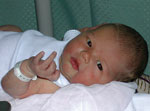 |
'For education to prepare children for meeting life realistically, it should encourage them to learn from life itself, and to view with skepticism a body of fixed knowledge that has been passed on unquestioned from one generation to the next.
'Education must above
all be experiential, and not merely theoretical. The student should be
taught, among other things, to observe the outcome of any course of action,
and not to depend blindly on the claims of others as to what that outcome
is supposed to be, and therefore will be.'
Chapter 2 in full can be found through this link for those who want to
go into greater depth.
 |
 |
© Shanti Lion Children's Trust: 2006, 2007
This Web page may be linked to any other Web sites. Contents may not be altered.